Showing posts with label Spike Lee. Show all posts

Tuesday, December 22, 2009

Brother, Can You Spare a Calendar?


Remember when you didn’t have to buy a calendar?


The local businesses in your neighborhood, the ones you patronized all year, the businesspeople you knew on a first-name basis, used to give calendars as a thank-you for your patronage.


Well, that has gone the way of the free toaster or blender you used to get from the local bank for opening an account.


“Do you have any 2010 calendars?” I ask the HSBC teller after cashing a check at my local branch in Yonkers, New York.


“Huh?” replies the teller who looks like she was born after the New York Mets’ last World Series title.


“I’ve had an account here for years,” I tell her. “You probably had a crush on Boyz II Men when I started banking here. You used to give out calendars every year.”


“Not me,” she says.


I think she actually thought I was referring to her specifically. So I thank her for attempting to answer my questions and I leave.


Is this the “new normal?”


I should no longer expect a calendar at the end of the year from the local bank, or dry cleaner, or insurance agent, or monolithic cable company, or grocer, or Chinese take-out joint?


Can they no longer afford that act of appreciation?


Or are we all still holding on by our fingernails and trying to survive the worst economic downturn since the Great Depression?


I’m afraid it’s the fingernail answer. Businesses now deem calendars an unnecessary expense.


I remember better days.


I grew up in a poor neighborhood. My brother and I used to go from store to store collecting calendars because that passed for entertainment in the Bed-Stuy section of Brooklyn.


(Bed-Stuy is where Spike Lee filmed Do the Right Thing 20 years ago.)


Nobody was rich in Bed-Stuy, otherwise you didn’t live there. But every business gave you a calendar at the end of the year just for asking.


The pet store, even though my parents wouldn’t let us have any more pets after my brother and I put our turtles in the freezer overnight just to see what would happen.


The liquor store. Yeah, they gave us calendars as part of some program to nurture a new generation of bitter, oppressed, alcohol-dependent customers.


The shoe store, the bodega, the Laundromat, the 5- and 10-cent store (now the 99-cent store) and the layaway stores that suckered poor folks into making monthly payments totaling $1,000 for a $400 color TV.


I used to get calendars from all those places.


Not anymore.


My Allstate agent used to mail me a nice refrigerator-magnet calendar.


But what’s the line from that Neil Diamond song?


“Used to be’s don’t count anymore

“They just fall to the floor

“And you sweep them away.”


That I still remember lyrics from a Neil Diamond song may be part of the problem. I remember how much better things used to be and I haven’t adjusted yet to the new normal.


If I want a 2010 calendar, I’m just going to have to buy it myself…after January 1 when it’s 50-percent off and the only ones left in the stores will have those boring pictures of dogs, cats or polar bears.


Happy New Year.


Wednesday, November 25, 2009

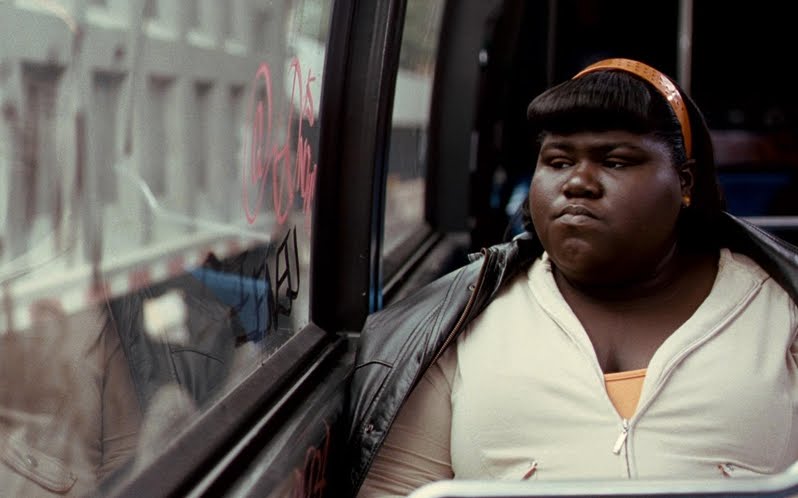
What if Tarantino had directed Precious?

If you intend to see Precious, a manipulative attempt to condemn society for generations of personal irresponsibility, don’t read this.


The billboard reads: “Oprah Winfrey and Tyler Perry Present Precious, Based on the Novel Push by Sapphire.”


If the film is nominated for an Oscar, I wonder if the title will be read that way on awards night in March 2010.


What I also wonder is would Precious be considered racist were it directed not by Lee Daniels, an African-American, but by a white director, say, Quentin Tarantino?


We are supposed to believe Precious is different because Winfrey and Perry have placed their pop-culture imprimaturs upon it.


And because the film is based on a book written by a black woman.


Well, I don’t buy it.


In 1997, Tarantino directed Jackie Brown, a film adapted from a book by Elmore Leonard. Jackie Brown featured Pam Grier in her first major-studio starring role in nearly a quarter-century, since the days of Coffy and Foxy Brown.


A controversy arose because in Jackie Brown, some characters had a seemingly obsessive compulsion to say “nigger.”


Spike Lee even accused his fellow auteur of racism.


That’s how these characters talk, Tarantino replied.


That’s how a lot of black people talk, he added.


Lee and other blacks disagreed.


Apparently, only black artists should be allowed to degrade black life.


I have never subscribed to that notion.


That is why the sounds and imagery and blatant emotional manipulation in Precious annoy me as much as the slur-fest in Jackie Brown.


Precious includes a scene showing the morbidly obese title character stealing a bucket of fried chicken, and another scene in which Precious’s mother throws a baby to the floor.


Another scene depicts a knock-down, drag-out fight between Precious and her mom.


Another scene shows the incestuous rape that produced both of Precious’s children, and refers to her first delivery, which occurred at home while mom kicked Precious in the head.


In yet another scene, mom demands Precious please her sexually.


Somewhere, D.W. Griffith is smiling.


These Precious scenes are from a decade-old book adapted just in time for the administration of the first African-American president.


“We’ll teach you darkies not to get all proud and uppity.”

– The Man


There’s no doubt in my mind we would hear certain black ministers call for marches on studio corporate headquarters and Birth of a Nation-type boycotts outside theaters if

Precious had been directed by a white person.


While I don’t consider Precious a contemporary version of 1918’s Birth of a Nation, Precious contains enough racist imagery to hinder rather than enhance the storytelling.


We don’t need to see Precious running down the street with a stolen bucket of fried chicken to know that her parents do not value her.


We don’t need to see her mother throw her newborn grandson to the floor to know that this woman is severely damaged.


Precious needed not a hammer, but a more subtle approach to telling the story of poor, ignorant black folks in 1987 Harlem who do not value themselves, and one girl’s struggle to break that cycle.


Spike Lee made a similar error in his 2000 film, Bamboozled, in which the call for an end to the negative imagery of blacks on television was blunted by his heavy-handed approach.


Precious is an interesting story not well-told.


Would Tarantino have done a better job?


Who knows? But given his ear for dialogue, the melodrama might have been leavened with some much-needed humor.


Precious has a hopeful ending, not a happy one.


We hope Precious breaks the cycle of ignorance and poverty in her family, but we don’t know. The single teen mother of two is just beginning to understand the value of education.


Now I wonder, and worry about, what Hollywood will learn from this film.


If Precious does well at the box office and wins an Oscar, there are bound to be other adaptations of ghetto-themed literature.


Alas, your neighborhood bookstores are full of them.


Full of books plumbing the depths of African-American ignorance and immorality that if adapted for the big screen would make the “blaxploitation” era of the 1970s look like the Golden Age of Cinema.